-->

December 30, 2011

Music of the heart

Last year, during one of our "preclinical clinical experiences," I presented a patient who happened to have an interesting heart murmur.  I was excited because heart murmurs can range from being very difficult to hear to being palpable with your hands.  Since this murmur was a normal variant and rather unnoticeable to anyone doing a quick head-to-toe (and therefore undocumented on the patient's history), the precepting physician double-checked my finding.

Sure enough, the doctor agreed.  It was more of a good teaching point than an interesting clinical finding, but nonetheless, it was a shining moment.  I had pointed it out to my fellow medical student earlier (heart murmurs I can do, but neurologic exams are another story, so this is not meant to sound immodest).  She asked the physician how to logically approach listening for murmurs, a question many of us have.

The physician started off by asking me if I had played an instrument.  I played flute for 10 years (competitively, to a ridiculous extent).  Normally, this is a topic I avoid, having heard enough American Pie jokes for a lifetime. The other student had not.

He described heart sounds as being like an orchestra; there's not just one melody.  There are many melodies and harmonies superimposed, creating a piece of music.  To a medical student, listening to the heart sounds like  a non-musician listening to music: you get the overall effect.  If one instrument is grossly out of tune, or grossly out of rhythm, it's obvious that something isn't right.

Listening to this could be daunting!

The trick to listening to heart sounds is to break it down.  Can you pick out the trombone playing the counter-melody?  Can you hear the tympani, the clarinet, the french horn?  You have to start with the core of the sound- for the heart, the "lub dub," the baseline in music. Then you can listen for other murmurs, clicks or snaps.  So much can be gained by knowing when in the cardiac cycle the extra sound occurs.  How can you describe it if you haven't even identified the basic parts?

Aha! Early systolic decrescendo murmur with a mid-systolic click. Ok, it's an unlikely pair.

Listening to the heart is just like listening to music; it takes a skilled ear, but it can be learned.  

December 29, 2011

medical school in pictures

for anyone interested in some pictures of daily life in medical school, enjoy!

First and second year in the classroom, but no one really listens!

Well ok, the people in the center rows listen (but notice no one's taking notes!)

You NEVER stop studying, even when you brush your teeth

Sometimes you spend the whole day in the lab (by choice of course)

Some days you dress in pink and host health fairs

Some days all you do is study and play on your iphone

December 23, 2011

"Light" Reading for Med Students

The problem in med school is that there are so many interesting topics that there's just no way to be exposed to them all, and once you graduate you'll NEVER have time to catch up.  And the fact that no one seems to have a "must read" list for med students and residents!!

The Emperor of All Maladies: A Biography of Cancer

Ok, this is actually a history of medicine with a focus on cancer.  I'm only about a hundred pages in, but I absolutely LOVE how the author weaves personal anecdotes of patient experiences and historical references seamlessly among the facts.  Also addressed- ethics, development of modern treatment, effects on patients' lives...


Cutting for Stone

By far, my favorite book on this list, and one of my all-time favorites.  I couldn't do it justice, so here's a critique:


Lauded for his sensitive memoir (My Own Country) about his time as a doctor in eastern Tennessee at the onset of the AIDS epidemic in the 80s, Verghese turns his formidable talents to fiction, mining his own life and experiences in a magnificent, sweeping novel that moves from India to Ethiopia to an inner-city hospital in New York City over decades and generations. Sister Mary Joseph Praise, a devout young nun, leaves the south Indian state of Kerala in 1947 for a missionary post in Yemen. During the arduous sea voyage, she saves the life of an English doctor bound for Ethiopia, Thomas Stone, who becomes a key player in her destiny when they meet up again at Missing Hospital in Addis Ababa. Seven years later, Sister Praise dies birthing twin boys: Shiva and Marion, the latter narrating his own and his brothers long, dramatic, biblical story set against the backdrop of political turmoil in Ethiopia, the life of the hospital compound in which they grow up and the love story of their adopted parents, both doctors at Missing. The boys become doctors as well and Vergheses weaving of the practice of medicine into the narrative is fascinating even as the story bobs and weaves with the power and coincidences of the best 19th-century novel.
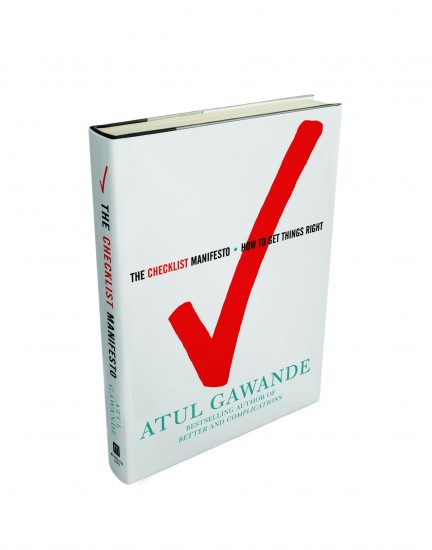


The Checklist Manifesto

While the author (a physician) wrote this with the focus of medicine, it's applicable to many other fields as well- business, law, government.  The author explains that while we have more knowledge and technology at our fingertips than ever before, flaws still exist in medicine (or business or law or you name it) because of imperfect execution and delivery.

For example, we know that heart attack patients need to have an intervention within a short period of time, but only about half make the time cutoff, because of all the little things in between or not recognizing the fact that the patient is having the heart attack to begin with despite our capability to do so. 


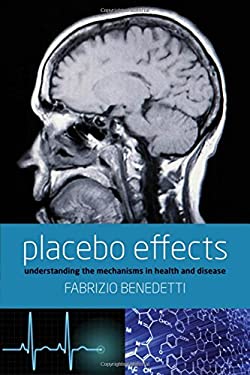
Placebo Effects: Understanding the mechanisms in health and disease

I just started this a few minutes ago, which prompted me to post this blog entry.  I think the idea of placebo in medicine is incredibly important and not only underutilized but unrecognized or misused.  We often consider placebo effects to be psychosomatic or for weak-minded people, but actual molecular changes can occur, especially regarding pain modulation!  I think this is a fascinating topic, not addressed in medical school, that can revolutionize how a doctor practices medicine.  I don't think we should withhold medicine, but rather augment treatment with evidence-proven techniques like encouragement, empathy and awareness.

This book is written by a physician and geared toward physicians, unlike many of the other books which are more for patients and lay people.


The Heart Speaks: A cardiologist reveals the secret language of healing

So I haven't started this one yet, but highly recommend it by what I've heard so far.  So here's a professional review.

With groundbreaking new research, Dr. Guarneri skillfully blends the science and drama of the heart's unfolding. She reveals the heart as a multilayered, complex organ and explores the new science that indicates the heart acts as a powerhouse of its own, possessing intelligence, memory, and decision-making abilities that are separate from the mind.


 Heart Matters: A memoir of a female heart surgeon

Having spent six weeks on cardiothoracic surgery, this one hits close to home.  There's not enough money in the world that would make me want to be a surgeon, but as a female looking to join a male-dominated field, this is a great motivator.  In fact, the first chapter provided me with an epiphany for my residency application (sorry, not sharing that for awhile!).  It's a humerus and occasionally-serious look at the struggles she faced in her journey to becoming a surgeon.


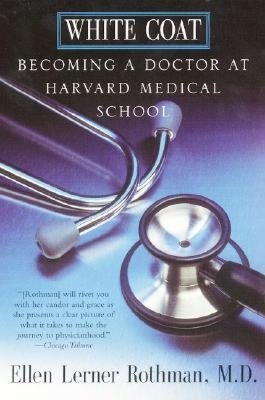
White Coat: Becoming a doctor at Harvard Medical School

I read this over the summer after my 2nd year, and I wish I'd found it earlier.  It's a few years old, but many of the emotions and reflections eerily parallel to my own (leading me to believe that this is a good representation of what med school is like).  In fact, I made my boyfriend read it at the beginning of our relationship so he knew what I was going through and how it would affect him.  It basically starts at the beginning of the author's journey and chronicles the trivial and the not-so-trivial experiences, from anatomy lab to clinical rotations to life outside of the classroom (what little there is).


The House of God

An oldie but goodie!  The author's emotions transcend time, and are 100% applicable to being an intern today. You also need to be familiar with the laws of the House of God as they are occasionally referenced to in the clinical setting and you're expected to understand the joke.
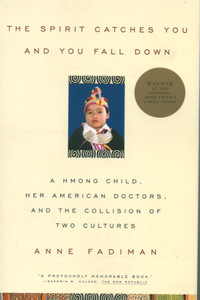


The Spirit Catches You and You Fall Down

A look inside the Hmong culture (mostly medicine) and how it clashes (and occasionally meshes with) "modern" medicine; a bit frustrating to read (I made it halfway through) but enlightening nonetheless- provides insight into cultural influence on how disease is understood, the role of family, decision-making, etc.  This has greatly impacted my understanding and appreciation (and patience) for other cultures with less trust in our system.


Better: A surgeon's notes on performance

Not my favorite, but a worthwhile read.  Critic review: A surgeon at the Brigham and Women's Hospital in Boston and an assistant professor at the Harvard School of Public Health, Dr. Atul Gawande succeeds in putting a human face on controversial topics like malpractice and global disparities in medical care, while taking an unflinching look at his own failings as a doctor. Critics appreciated his candor, his sly sense of humor, and his skill in examining difficult issues from many perspectives. He conveys his message—that doctors are only human and therefore must always be diligent and resourceful in fulfilling their duties—in clear, confident prose. Most critics' only complaint was that half of the essays are reprints of earlier articles. Gawande's arguments, by turns inspiring and unsettling, may cause you to see your own doctor in a whole new light.


My Stroke of Insight

A ridiculously easy read (written with the layperson in mind), by a neuroanatomist who details her experience of having a stroke from a scientist's point of view.  I've recommended this book to family members, coworkers and patients- it's a great way for health care professionals to gain insight into what stroke patients are experiencing, and for stroke patients to understand what is happening to the brain.  Symptom by symptom the author reflects on the anatomy, physiology and pathophysiology of strokes (while remarkably remaining in denial about the fact that she needed help). Pretty fascinating!


 The Lost Art of Healing: Practicing Compassion in Medicine

Written by Dr. Bernard Lown, who developed the defibrillator, this is one of my all-time favorites.  It should be a must-read for all physicians and physicians-in-training. Using patients' stories, he reflects on the importance of empathy and compassion, and shares insight about how seemingly-trivial words can change someone's life. My favorite is when he has his students and residents listen to the "gallop" of a patient with severe heart failure, who miraculously recovered, later crediting Dr. Lown for giving him the encouragement, because a heart that could still gallop must be strong!


On the shelf, to be read:

The Sublime Engine: A biography of the human heart

Amazon description: In this lyrical history of our most essential organ, a critically-acclaimed novelist and a leading cardiologist--who happen to be brothers--draw upon history, science, religion, popular culture, and literature to illuminate all of the heart's physical and figurative chambers. Divided into four sections: ‘The Ancient Heart,’ ‘The Renaissance Heart,’ ‘The Modern Heart’ and ‘The Future Heart,’ each section will focus on a major epoch in our understanding of the heart and the hidden history of cardiology. Erudite, witty, and enthralling, The Sublime Engine will make the heart come alive for readers.
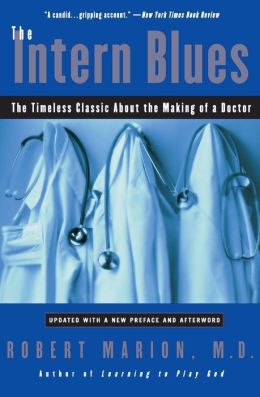


 Intern Blues: The timeless classic about the making of a doctor

Amazon description: While supervising a small group of interns at a major New York medical center, Dr. Robert Marion asked three of them to keep a careful diary over the course of a year. Andy, Mark, and Amy vividly describe their real-life lessons in treating very sick children; confronting child abuse and the awful human impact of the AIDS epidemic; skirting the indifference of the hospital bureaucracy; and overcoming their own fears, insecurities, and constant fatigue. Their stories are harrowing and often funny; their personal triumph is unforgettable.


Other books on Medscape's must-read list:

My Own Country (Abraham Verghese)
Love in the Time of Cholera (Gabriel Garcia Marquez)
The Immortal Life of Henrietta Lacks (Rebecca Skloot)
Arrowsmith (Sinclair Lewis)
Complications: A surgeon's Notes on an Imperfect Science (Atul Gawande)

December 13, 2011

Don't wanna go home

So I was on call today and I was with the residents having a relaxing late lunch- as we only have one patient and haven't had any new admissions- and they mentioned that once I did this one task that I could go home. Normally any mention of the word "home" causes a huge rush of endorphins and racing thoughts of how I can finish my assignments as quickly as possible. But today my unconscious first thought was "I DON'T WANT TO GO HOME!" (mental silence.) I realized instantly how ridiculous that sounded as soon as I thought it. I'm perpetually exhausted, my apartment is a mess, and I have two dogs at home who can't hold their bladders for 12 hours.  I obviously had a split second of mental insanity. However, reflecting over the past hour (it's still bothering me), I cant help but be incredibly grateful for an amazing group of residents for these 3 weeks who have actually made me feel like I've done a good job and haven't been a complete waste of their time.  So now it's much later and I got my horrible wish to stay because we got a new patient.  But I got to hear a male resident sing Justin Bieber songs and that was the icing on today's cake.

December 4, 2011

Pimpin ain't easy

I feel like now that this blog has kind of transformed into a med student blog (ok, well actually has, overnight), I have to comment on pimping.

Pimping is basically what attending physicians do to students in order to "teach."  There are many different styles, and everyone has their own opinion, but here's mine.

There are essentially three types of doctors: those who don't pimp at all, those who pimp but really want you to learn (nice-pimping), and those who pimp because they can/hate students/have identity issues/hate people in general/hate their job (angry-pimping). I thought I'd prefer the non-pimpers, but you honestly don't learn anything on those rotations.  I still feel like a complete idiot during constructive (nice) pimping, but I definitely remember that stuff.

You can pretty much predict what kind of pimping to expect by the service.  Psychiatrists and family medicine docs tend to be more nurturing and point interesting things out (which I appreciate immensely, but promptly forget).  This, however, is good to have every few months to allow neuronal healing.  Surgeons tend to be on the other side of that spectrum.

As a med student, you also get really used to answering "I don't know."  The first few times are painful, as most of us are type A perfectionists, but after a few times it becomes second nature.  So, really the difference between being nice-pimped and angry-pimped is how embarrassed and humiliated you feel when you say "I don't know."

The worst kind of pimping is when it's not even related to medicine, like when that CT surgeon pimped me for 7 hours during a surgery about what band sang each song on his iPod (I got one right, total).  That's by far the biggest ego deflation, as you don't feel worthy enough to even get angry-pimped.

So thank your lucky stars when you get nice-pimped, or even angry-pimped.  At least they're acknowledging your role as a student.

Addendum 1/9/2012:


December 3, 2011

Troponinitis (Law 10 of The House of God)

If you've ever met me, you know that my calling my neuroticism regarding cardiology "pathologic" would be a huge understatement.

Well, after two and a half years, I'm finally on a cardiology rotation.  Not medicine, not find-the-heart-patient-in-OBGYN, not a summer research program where I got to hang out on cards rounds- I've finally made it to the bona fide third year selective of INPATIENT CARDIOLOGY!

Needless to say, I've been looking forward to this for a very, very long time.  But boy, I was in for a big surprise.

I've seen like 30 patients this week on the cardiology service.  And NONE of them were in the hospital for HEART problems!!!  So far I've seen gastroenteritis, cholecystitis, personality disorders, immune disorders, poisonings, you name it.  And they all have some sort of cardiac problem, but that's not their immediate problem.

So really, this is just a glorified internal medicine rotation.  But I started thinking...I've got three years of medicine before cardiology fellowship!  AND three years of cardiology fellowship with patients just like these!  Then who knows after that.  So really, this has just been a bit of an eye-opener about what the rest of my life is going to be like.

I don't love cardiology any less, but I'm 5 days "less naive" about my career choice.

One of the most useful lessons I've learned this week (well, saw put into practice) was jokingly referred to today as troponinitis.  The layman's description is best describe by one of the laws of The House of God which is one of the best books ever written about being a resident (the details are a bit outdated but the concepts are timeless):
IF YOU DON’T TAKE A TEMPERATURE, YOU CAN’T FIND A FEVER.
From a patient's perspective, this sounds terrible.  But clinically, it's an essential part of medicine.  If you do an MRI on every patient, you'll find something in every patient.  As cliche as it is, it's so important because you may be worsening an outcome by finding something (what if the patient dies in the OR, but otherwise would have lived another 5 happy, relatively healthy years?).

So troponinitis is fairly specific to cardiology- troponins are a marker of muscle death, which is part of the diagnosis during a heart attack.  It's easy to jump the gun and order the test on every patient on the cardiology service- these patients have a higher risk, so why run the chance of missing a heart attack, right?

Wrong.  For explanation's sake, the cutoff of normal is less than 0.06 (hospital-specific, for you picky people).  People having heart attacks typically have levels over 5, and sometimes much higher.  But what happens when you get a number just above normal, but isn't really suggestive of a heart attack??  Today my patient's was 0.07.  She was obviously not having a heart attack.

Then the problem shifts from "how to save the patient" to "how to save the hospital."  As horrible as it is, a lot of medicine these days is focused on how to prevent malpractice suits.  (This is another soapbox of mine which I would NEVER blog about.  But I honestly wonder how morbidity and mortality rates would change if there were no lawyers.)  The appropriate thing is to do a full, expensive, time-consuming, potentially-damaging workup on a patient who doesn't need it.

So this is a good example of how medicine is more of an art than it is a science, and what clinical years of med school and residency are about, rather than the details of physiology and things like that.

PS. "Troponinitis" is medical jargon, not an actual term (although many doctors would understand the reference), in case that wasn't clear.  It's basically a complaint that the levels came back elevated even though heart attack is EXTREMELY unlikely, leaving a clinical predicament.

November 20, 2011

Analogous explanations of my life

So, rotations are a very interesting time in your life where you really have to confront your fears and insecurities and values and morals.  The only word I can think of is VIVID. I feel like I'm having to get to know myself in a way that's super uncomfortable- you have to know your strengths and weaknesses like the back of your hand in order to succeed in the field of medicine.  Anyway for some reason when I'm on a rotation these analogies dominate my thoughts, and they're pretty hilarious when you think about them (although I'm dead serious, they are about as true as I can get).  And I think they paint a picture worth a thousand words for each of the rotations I've done so far.


Geriatric Psych: treading water, without feet, in an ocean with no land in sight.
Fam Med: having to pick ALL the daisies in a very big but beautiful field.
Surgery: facing a firing squad while sitting in an electric chair.
Obstetrics: giving your bank PIN number to a crack addict.

November 4, 2011

Introducing Bayle!

Happen to one day be surfing the net and ran across this picture of a dog waiting to be adopted near Charleston:

I am Bubbles- my names tells you all about my personality. My family left me and moved. I am about 1 1/2 years old and have a ton of love to give you. I am spunky and love to play with tennis balls. I get along with all other dogs and children. i am spayed, microchipped and up to date on all vaccinations.

 I found out that she had been found in an abandoned house about a year ago, and has been in a shelter ever since, waiting for a "forever family."  Well, long story short, we ("we" is used loosely- Patrick can still "opt out") brought her home.

Her name is now Bayle (it's a medical reference but that's another story).  She hadn't seen stairs or elevators or beds or couches before, having lived in a shelter most of her life.  So it's been wonderful experiencing all of these new things with her.  As far as we can tell, she's extremely happy to join the family, and Bandaid is absolutely thrilled to have a new partner in crime.

 Bayle (above)

 Bandaid, left; Bayle, right

Bandaid, left

Bandaid, left

Best bet is that Bayle's got the bone...

October 29, 2011

What's in a name?

So this isn't 100%, but it looks like I might have found Bandaid's sister and *may* adopt her.  Yes, it's crazy.  Whatever, that decision is not the point of this posting and isn't up for discussion.

So I'm looking for dog names ("Bubbles" is not going to work) and was trying to find something heart-related.  I'm thinking about naming her after a pioneer in cardiology, and the closest to a girl name I've found so far is Adrian (the guy who did the first heart transplant in the US) because no woman has pioneered anything in the field yet (leaving the door open for me).

So anyway I came across this picture, and if you think about it, it's pretty downright stupid. Like three amazingly brilliant surgeons pointing to a really dumbed-down model of a heart.  AND they're looking at the back of the heart, which is much less interesting than the front.

It's such an unlikely scenario and kind of makes you question what they actually knew when they did the first bunch of these surgeries (just fyi, the first bunch were all "considered" successes but died within weeks...but you can judge for yourself).  FOUR DAYS AND IT'S OVER.  Anyway....cheers.

October 15, 2011

new theory

So my new theory is that being severely obtunded secondary to chronic sleep deprivation during the cardiothoracic surgery rotation is actually a protective mechanism.

I'm exhausted, but I can't remember what I got yelled at for this week.

October 11, 2011

Empathopenia

A brief commentary on empathy in medical school.

So I keep hearing that empathy dips to the lowest of lows during third year of med school.  I really couldn't figure that one out.  I definitely went through a phase as a paramedic after a few years of 3am paper cuts and back pain for 3 weeks.  So I know what it's like and how to mentally combat it (I was prepared this time!).

Well it hasn't happened yet.  What I HAVE lost is a lot of respect for the medical field.  How freaking sad is that??  I'll have to be unconscious and dying before I show up at a hospital now.

It's definitely not the patients.  Even my most bitter patients still make me smile and laugh; they are a challenge that I honestly enjoy taking on.

Really I think it's seeing my superiors not doing all those things they tell us to ALWAYS do- taking complaints seriously, addressing pain, listening rather than talking, being open-minded.  I know in a lot of cases it's a time constraint (which boils down to a lack of resources) but just as often it's not.  Even if I'm dead on my feet and have been awake for 40 hours, I still put the rest of my energy into making sure I'm being a good med student for my patient.

I think that I now define "successful doctor" (my personal end goal) is one who can put everything else aside and still be 100% committed to the patient's best interest.  When did that stop happening??

October 8, 2011

You can never practice enough

So my first official surgery that I scrubbed into last week was actually pretty thrilling.  I actually got to participate; I was given opportunities that are usually reserved for residents.  It was tough standing there for 7 hours (mostly because I was preoccupied for most of it worrying about what I would be orally grilled on), but it was amazing to stand there- opposite the surgeon- looking at a man's beating heart.  Although I can't look back and say that I made an "impressive impression" on the surgeons, I feel like I at least gained a little respect.

One thing my mentor taught me is that silence is often the biggest compliment a doctor can give a student.  Handing me the instruments during the surgery, allowing me to help open the patient's chest, was one of the biggest compliments I've gotten so far in my career.

I even got to suture!  Ok, it definitely wasn't my first time.  I'm still pretty slow but it's a skill that I've put some time into developing.  After the surgery one of the surgeons handed me an instrument used for suturing and told me, "you can never get enough practice."

And I'll honestly never forget that, especially since it can apply to everything in medicine.

So for a laugh, I'll share a picture of one of the poor washcloths that has fallen victim to my practicing.  It's hard to see, but all edges are closed! (Plus there are a few aberrant stitches and knots for fun.)

September 29, 2011

The surgical approach to reasoning

So, I haven't had a chance to post in awhile.  I started my surgery clerkship on Monday, and it's been solid 14-hour days straight, starting around 4:30am!  I've really been dreading this rotation, which is one of the major reasons I opted to do it early.  Patrick had to listen to me whine about it for a solid month, and it hadn't even started yet!

Basically each student gets assigned to a different service- plastic surgery, orthopedics, pediatrics, trauma, etc.  Well, I got assigned to cardiothoracic surgery, and it doesn't have a great reputation because of the grueling hours, long surgeries and hard-core doctors.  So I was really, really anxious about this, even though I knew it'd make me a better doctor in the end and possibly help me if I go into cardiology.

So the first few days weren't fantastic.  It's not fun waking up at 3:30am or being grilled about chest tube leaks or the innominate vein (I did not get that question right).  It's REALLY not fun getting on the nurses' black list because it's your first day and you don't know where your patient is in pre-op.

Anyway, today was actually better than I could've imagined any of this going.  No, it wasn't even a "good" day, relatively speaking, but for the first time I came home and thought, today wasn't terrible.

I'm PSYCHED!

No joke.

Anyway, I won't go into detail, but I had another epiphany in the OR (standing around for 6 hours, you have a lot of time to just think).  Standing next to the surgeons, I had a great view of the surgical field.  I saw something that was concerning, but I wasn't sure.  I was torn between staying quiet and not interrupting and not risking offending the doctors, and asking about it.

Before all of this, I was totally the person who just lets stuff go.  I'm SO bad about not telling people there is food on their face and stuff like that- I don't want to offend them (but I'd want them to tell me...so yes, I'm hypocritical).

Anyway, I reflected on this briefly (not long enough to be life-threatening or anything!), and I remembered something from OBGYN.  A pregnant woman asked a doctor about what she could or couldn't do during pregnancy, and the OB told her that most things are probably ok, but to always keep the future in mind.  If your child is born with an extra finger, are you going to blame yourself for having that one glass of wine?

I would.  So I reasoned that if something happened to the patient and I hadn't said anything, I would have blamed myself and always questioned whether or not I could have prevented a problem.

Anyway, without revealing too much: I mentioned it, it wasn't "well-received," but then it was addressed.  I will never know if that made a difference, but I know there were some problems near the end that I might have questioned myself on.  I'm not sure I would have been able to sleep at night if I hadn't, but thankfully I'm guilt-free.

September 23, 2011

Doggelganger

Honestly the funniest thing I've ever seen.  Upload a picture of yourself and it matches your face with a dog.  No joke:


The real Bandaid:


September 20, 2011

Another funny..

A patient wore this into her ultrasound appointment last week.  I think it'd be funnier if the mom's hand had been in the u/s with HER middle finger up instead of the kids- this mom was NOT happy to be there that day!

Maybe it's just me..

But don't these logos look a bit similar?  I definitely did a double-take when I saw United's on a commercial.


September 19, 2011

Atrocious or delicious?

It's the turducken of desserts: the ChocoOreoChip cookie!!!  I can't imagine what they'd taste like..but I have a feeling it'd be really awesome or really nasty.

September 12, 2011

my fortune cookie..

funny that this was my fortune after a crappy day, feeling like the harder I tried the worse the day went. had a lot of good people tell me that I should worry less about the details, that everything will work the way I imagined if I want it badly enough.

September 11, 2011

Doctors treat diseases, 
but they also treat people, 
and this precondition 
of their professional existence 
sometimes pulls them 
in two directions at once.


-June Goodfield

quoted in The Emperor of All Maladies: A Biography of Cancer

September 4, 2011

Last week while on labor and delivery a bunch of nurses and doctors were making fun of online dating and how there's no possible way it could work.  In honor of that:


August 28, 2011

it's all about compatibility

So I keep seeing eHarmony commercials on TV and I realized I hadn't really blogged about my online dating experience.  I am the LEAST adventurous person I know and swore I'd never do it, but I caved (it was a New Years' resolution, probably the first that was successful).  And I still can't believe that it worked out so well for me.

It started over Christmas break last year; I saw a commercial for another dating site and joined.  My dear friend Jen seemed appalled that I hadn't joined eHarmony, and convinced me to try that instead.  (I ended up paying for both sites.)  Anyway, the first week was exciting, getting messages and whatnot, but it started to wear off.  It almost felt like being in a bar but from the comfort of my own apartment.  I even felt awkward not responding to messages, like I was personally deflating their egos.

A month or so later, I got a canned message from this guy named Patrick from Savannah (I still give him a hard time about not being very personal on the first one, but he still argues that he didn't want to mess anything up).  As horrible as it sounds, I saw his job and had it been anything else I probably wouldn't have kept reading (sorry sweetie!).  Having gone through most of my adult life so far surrounded by public safety people, I think I'm still drawn in that direction even though many of them probably aren't relationship material (first- and second-hand experience cited).

Well, it worked out.  We emailed for a few weeks, then talked on the phone.  I think this lengthy (well, relatively speaking) period of communication was really important and one of the reasons why it's worked out so well. I was still scared to death on our first date that he'd be a serial killer, so I had a bunch of people on standby just in case.  He drove to Charleston and we spent a wonderful afternoon downtown.  (Pretty sure he's not a serial killer.)

AND he's got a swoon-worthy uniform!

I keep telling him that I can't believe it worked out like this for us.  Being a med student with little time and no money, I'm not an ideal candidate after first glance.  But I'm so lucky to have found a guy who not only doesn't mind that I'm always busy or complaining endlessly about school, or that I have a crazy dog and cat, he embraces it and loves me for it!  It's been almost six months of "official" dating and I don't think he's ever said "no" or "why" when I ask him to do something for me.

This year and the next few years are probably going to be the toughest in my life, but it is so much more bearable knowing that I have such a wonderful support system- between Patrick and the rest of my family behind me 200%.  But really- Patrick, you really don't know what you're in for :).

The craziest part about this whole thing is that HE still thinks he's the luckier one!


August 17, 2011

If only...

Tried clicking on this link and it DIDN'T work.  It would've made the next few years WAY easier :).


August 15, 2011

No second chances

So I definitely had another revelation today.  It's been shown that medical students are the most cynical and least altruistic during their third year.  Having spent a lot of time in the field, I definitely had my period of complete bitterness and misanthropy as a paramedic, but now that I've already hit that period I thought I wouldn't go through it again.  I think that everyone in the medical field, at some point early in his or her career, experiences this common feeling of frustration: the system is messed up, and it needs to be fixed.  And everyone is right, except that really, it can't be fixed.

So again, I thought I was done with that.  I'd moved on, accepted the fact that I can't really change the big picture, that I need to just focus on my own patients.  Most importantly, I have to accept what they tell me- regardless of my feelings or opinions- except in absolutely definitive and obvious cases.  And it took several years and thousands of patients to get to that point.

Anyway, this evening I realized that I'm just as cynical as I was at my lowest point and I couldn't figure out why. Walking around with Bandaid, while trying to keep him from bolting at the several groups of people he was madly barking at, I figured it out.

Really it started with me trying to figure out why people keep walking toward me and Bandaid when he is growling and barking and acting vicious, obviously making it extremely difficult for me and putting them at risk for a nasty bite (which they may or may not deserve).  Or why someone gets startled when he barks, even though he or she knows a dog is right there.  Why are these actions repeated over and over again, when they know what the potential consequences are??

It suddenly struck me.
"The definition of insanity is doing the same thing over and over and expecting different results."
I freaking get it.  My cynicism has NOTHING to do with medicine, it's with people in general.  When people are hurt or sick, they come to the hospital.  It may just be a cold, but they haven't studied medicine intensively like I have.  I can't justify getting frustrated with someone who doesn't know that it's just a cold and that antibiotics won't help at all.  You can't fault the child who reaches up to the boiling pot of water and burns his hand the first time- because usually it's his last.

But when someone does something absolutely stupid, knowing that it will lead to something else that is stupid, I get frustrated.  If you don't do your homework, don't be surprised when you fail the class.  If you walk into traffic, don't be surprised when you get hit by a car.  If you bungee jump off of a bridge, you can't really be surprised if the cord breaks.  If you snort cocaine, you're probably going to overdose or die of a heart attack.  People are conditioned to NOT do stupid things from the day they are born, yet they continue to do it.

But as a medical student, I'm expected to get everything right the FIRST time.  Even if I haven't seen it before.  Imagine a doctor who sends a patient home with a heart attack.  And then does it again.  And again.  This would absolutely never happen.  An attending can justifiably yell at a student or intern for doing something incorrectly even if it's the first time he or she has seen it or done it.

Guess that's why perfectionists go into professions where you don't get second chances.

August 12, 2011

It could always be worse.

So when I have a bad day at school (well, work now), I like to go home and google things that I will be able to afford in 20 years.  These days I'm looking at gorgeous houses, looking for ideas for my own.  I'd love to be able to design my own.  I was going to post some of the prettiest, but I'm finding so many ridiculous ones I have to share those first.

carpeted bathroom...and a lot of other problems

I'm not really sure I understand this tub.  Maybe the owner has a horse?

 this is in a $500,000 house

I don't really understand this either.  And it's definitely not a woman's bathroom because there's no storage space.

Um...there are no words.

This is DEFINITELY worse than anything I've ever done.

This looks like it should be in the White House or something.  What's up with the teeny-tiny sconces, the huge pillars, the randomly-placed urn, the tiny dining room table, that horrible carpet, the magenta paint that's about two shades off from the rug, and that ridiculous American flag thing???

How fun would it be to watch someone fall down these steps??