I actually heard this conversation last week in the office.
Patient: Doctor! I'm having these symptoms [of heart failure] that are listed as side effects of my heart failure medications! So I stopped taking them!
Cardiologist: Actually those symptoms are due to your heart failure.
Patient: But I have every single one!
Cardiologist: Those are also the side effects listed for WATER.
January 22, 2012
January 15, 2012
They done "GERD:" an amazing acid reflux fix
Medical technology follows the same rules as everything else: sometimes the simplest ideas are the most brilliant.
GERD (acid reflux) is often a result of an incompetent muscle at the end of the esophagus where it meets the stomach. It should be able to constrict to prevent food (coated in nasty stomach acid) from "refluxing" back up. This is why people complain of burning after eating.
One of my few soapboxes (I feel entitled to one or two more each year that I've been in medicine, so I only have a few, but they're important and evidence-based!) is about reflux. It's a known fact that untreated or poorly controlled reflux can sometimes lead to cellular changes in the esophagus, causing Barrett's esophagus which is basically pre-cancerous. So preventing reflux (by watching what you eat, and taking the over-the-counter medications) you can actually help PREVENT esophageal cancer! Of course, like most other things, just because you prevent reflux doesn't mean you are 100% protected against cancer (like non-smokers can still get lung cancer), just to protect my reputation here.
A quick interjection: esophageal cancer is horrible. Treatment often involves surgery and chemotherapy/radiation, neither of which are pleasant, to say the least. After surgery, you are left without a stomach- the stomach is actually pulled up through the chest to replace the esophagus. This leaves you unable to keep much food down at a time- you must eat frequent, small meals, and have a lifelong propensity for nausea, vomiting, pain, and lots of other problems.

So I got really excited when I saw this new device, which is basically a ring of magnets that is placed at the bottom of the esophagus! When the problem causing the reflux is a muscle that doesn't constrict properly, how brilliant is it to help it out by putting a circular magnet there?! Anyway, in people who still have reflux despite medication and diet modification, it has been shown to lessen and sometimes eliminate symptoms altogether. I don't think it's FDA approved yet but there are research trials currently.
Just some "food for thought!"
One of my few soapboxes (I feel entitled to one or two more each year that I've been in medicine, so I only have a few, but they're important and evidence-based!) is about reflux. It's a known fact that untreated or poorly controlled reflux can sometimes lead to cellular changes in the esophagus, causing Barrett's esophagus which is basically pre-cancerous. So preventing reflux (by watching what you eat, and taking the over-the-counter medications) you can actually help PREVENT esophageal cancer! Of course, like most other things, just because you prevent reflux doesn't mean you are 100% protected against cancer (like non-smokers can still get lung cancer), just to protect my reputation here.
A quick interjection: esophageal cancer is horrible. Treatment often involves surgery and chemotherapy/radiation, neither of which are pleasant, to say the least. After surgery, you are left without a stomach- the stomach is actually pulled up through the chest to replace the esophagus. This leaves you unable to keep much food down at a time- you must eat frequent, small meals, and have a lifelong propensity for nausea, vomiting, pain, and lots of other problems.

So I got really excited when I saw this new device, which is basically a ring of magnets that is placed at the bottom of the esophagus! When the problem causing the reflux is a muscle that doesn't constrict properly, how brilliant is it to help it out by putting a circular magnet there?! Anyway, in people who still have reflux despite medication and diet modification, it has been shown to lessen and sometimes eliminate symptoms altogether. I don't think it's FDA approved yet but there are research trials currently.
Just some "food for thought!"
January 14, 2012
The complete cardiothoracic surgeon
The complete cardiothoracic surgeon: qualities of excellence
1. The first quality of a complete cardiothoracic surgeon is that of being an excellent surgeon
2. The complete cardiothoracic surgeon of the second millennium must have a detailed knowledge of cardiorespiratory physiology
3. The complete cardiothoracic surgeon must also be an excellent teacher and have a knowledge of cardiothoracic surgical education
4. The complete cardiothoracic surgeon must be an excellent radiologist
5. The complete cardiothoracic surgeon must have a detailed knowledge of healthcare economics
6. The complete cardiothoracic surgeon must have an in-depth knowledge of new surgical technology
7. The complete cardiothoracic surgeon of the second millennium must be a leader
8. The complete cardiothoracic surgeon must be adaptable
9. The complete cardiothoracic surgeon must have a knowledge of the history of cardiothoracic surgery
10. The complete cardiothoracic surgeon should develop, to the best of his ability, the quality of being persistent
11. The complete cardiothoracic surgeon must also be a humanist
12. The complete cardiothoracic surgeon should develop a hobby
13. The element of faith
January 9, 2012
The Unwritten Rules of Hospital Chair Hierarchy
So the ONE thing I have gotten in trouble for more than once during the first half of third year? Sitting down. Harkens back to my days as a lowly paramedic student (I'm on about the same level still, five years later), when nurses playing solitaire on the computer got to sit down, while I stood for 12-20 hours at a time (my back STILL HURTS from that). This has resulted in my NEVER sitting down, which draws a lot of sarcastic remarks like, "You can have a seat, unless you're glued to the wall."
Anyway, a brief reflection on the hierarchical (or bureaucratic, who knows) manner in which seating rights are determined:
- Patients with legitimate complaint
- Attending physicians
- Family of patients with legitimate complaint
- Staff controlling salaries/quality assurance/billing
- Senior nurses
- All other nurses
- Resident physicians
- Patients without a legitimate complaint
- Family of patients without a legitimate complaint
- Intern physicians
- Purses, suitcases, laptops, stuffed animals, and children who have strollers but prefer that last chair
- Bed bugs, noseeums, and the like
- Med students
December 30, 2011
Music of the heart
Last year, during one of our "preclinical clinical experiences," I presented a patient who happened to have an interesting heart murmur. I was excited because heart murmurs can range from being very difficult to hear to being palpable with your hands. Since this murmur was a normal variant and rather unnoticeable to anyone doing a quick head-to-toe (and therefore undocumented on the patient's history), the precepting physician double-checked my finding.
Sure enough, the doctor agreed. It was more of a good teaching point than an interesting clinical finding, but nonetheless, it was a shining moment. I had pointed it out to my fellow medical student earlier (heart murmurs I can do, but neurologic exams are another story, so this is not meant to sound immodest). She asked the physician how to logically approach listening for murmurs, a question many of us have.
The physician started off by asking me if I had played an instrument. I played flute for 10 years (competitively, to a ridiculous extent). Normally, this is a topic I avoid, having heard enough American Pie jokes for a lifetime. The other student had not.
He described heart sounds as being like an orchestra; there's not just one melody. There are many melodies and harmonies superimposed, creating a piece of music. To a medical student, listening to the heart sounds like a non-musician listening to music: you get the overall effect. If one instrument is grossly out of tune, or grossly out of rhythm, it's obvious that something isn't right.
| Listening to this could be daunting! |
The trick to listening to heart sounds is to break it down. Can you pick out the trombone playing the counter-melody? Can you hear the tympani, the clarinet, the french horn? You have to start with the core of the sound- for the heart, the "lub dub," the baseline in music. Then you can listen for other murmurs, clicks or snaps. So much can be gained by knowing when in the cardiac cycle the extra sound occurs. How can you describe it if you haven't even identified the basic parts?
| Aha! Early systolic decrescendo murmur with a mid-systolic click. Ok, it's an unlikely pair. |
Listening to the heart is just like listening to music; it takes a skilled ear, but it can be learned.
December 29, 2011
medical school in pictures
for anyone interested in some pictures of daily life in medical school, enjoy!
| First and second year in the classroom, but no one really listens! |
| Well ok, the people in the center rows listen (but notice no one's taking notes!) |
| You NEVER stop studying, even when you brush your teeth |
| Sometimes you spend the whole day in the lab (by choice of course) |
| Some days you dress in pink and host health fairs |
| Some days all you do is study and play on your iphone |
December 23, 2011
"Light" Reading for Med Students
The problem in med school is that there are so many interesting topics that there's just no way to be exposed to them all, and once you graduate you'll NEVER have time to catch up. And the fact that no one seems to have a "must read" list for med students and residents!!
The Emperor of All Maladies: A Biography of Cancer
Ok, this is actually a history of medicine with a focus on cancer. I'm only about a hundred pages in, but I absolutely LOVE how the author weaves personal anecdotes of patient experiences and historical references seamlessly among the facts. Also addressed- ethics, development of modern treatment, effects on patients' lives...

Cutting for Stone
By far, my favorite book on this list, and one of my all-time favorites. I couldn't do it justice, so here's a critique:
Lauded for his sensitive memoir (My Own Country) about his time as a doctor in eastern Tennessee at the onset of the AIDS epidemic in the 80s, Verghese turns his formidable talents to fiction, mining his own life and experiences in a magnificent, sweeping novel that moves from India to Ethiopia to an inner-city hospital in New York City over decades and generations. Sister Mary Joseph Praise, a devout young nun, leaves the south Indian state of Kerala in 1947 for a missionary post in Yemen. During the arduous sea voyage, she saves the life of an English doctor bound for Ethiopia, Thomas Stone, who becomes a key player in her destiny when they meet up again at Missing Hospital in Addis Ababa. Seven years later, Sister Praise dies birthing twin boys: Shiva and Marion, the latter narrating his own and his brothers long, dramatic, biblical story set against the backdrop of political turmoil in Ethiopia, the life of the hospital compound in which they grow up and the love story of their adopted parents, both doctors at Missing. The boys become doctors as well and Vergheses weaving of the practice of medicine into the narrative is fascinating even as the story bobs and weaves with the power and coincidences of the best 19th-century novel.
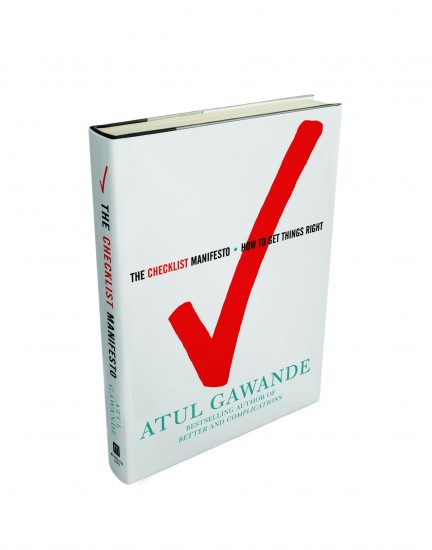
The Checklist Manifesto
While the author (a physician) wrote this with the focus of medicine, it's applicable to many other fields as well- business, law, government. The author explains that while we have more knowledge and technology at our fingertips than ever before, flaws still exist in medicine (or business or law or you name it) because of imperfect execution and delivery.
For example, we know that heart attack patients need to have an intervention within a short period of time, but only about half make the time cutoff, because of all the little things in between or not recognizing the fact that the patient is having the heart attack to begin with despite our capability to do so.
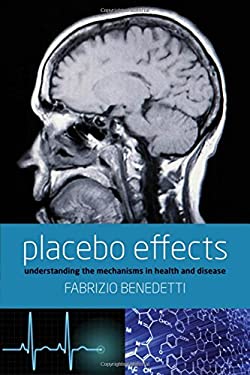
Placebo Effects: Understanding the mechanisms in health and disease
I just started this a few minutes ago, which prompted me to post this blog entry. I think the idea of placebo in medicine is incredibly important and not only underutilized but unrecognized or misused. We often consider placebo effects to be psychosomatic or for weak-minded people, but actual molecular changes can occur, especially regarding pain modulation! I think this is a fascinating topic, not addressed in medical school, that can revolutionize how a doctor practices medicine. I don't think we should withhold medicine, but rather augment treatment with evidence-proven techniques like encouragement, empathy and awareness.
This book is written by a physician and geared toward physicians, unlike many of the other books which are more for patients and lay people.
The Heart Speaks: A cardiologist reveals the secret language of healing
So I haven't started this one yet, but highly recommend it by what I've heard so far. So here's a professional review.
With groundbreaking new research, Dr. Guarneri skillfully blends the science and drama of the heart's unfolding. She reveals the heart as a multilayered, complex organ and explores the new science that indicates the heart acts as a powerhouse of its own, possessing intelligence, memory, and decision-making abilities that are separate from the mind.
Heart Matters: A memoir of a female heart surgeon
Having spent six weeks on cardiothoracic surgery, this one hits close to home. There's not enough money in the world that would make me want to be a surgeon, but as a female looking to join a male-dominated field, this is a great motivator. In fact, the first chapter provided me with an epiphany for my residency application (sorry, not sharing that for awhile!). It's a humerus and occasionally-serious look at the struggles she faced in her journey to becoming a surgeon.
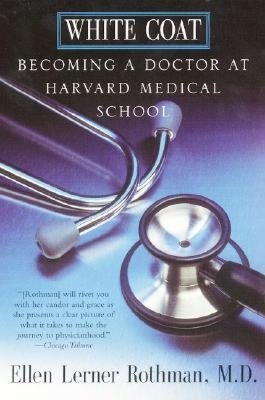
White Coat: Becoming a doctor at Harvard Medical School
I read this over the summer after my 2nd year, and I wish I'd found it earlier. It's a few years old, but many of the emotions and reflections eerily parallel to my own (leading me to believe that this is a good representation of what med school is like). In fact, I made my boyfriend read it at the beginning of our relationship so he knew what I was going through and how it would affect him. It basically starts at the beginning of the author's journey and chronicles the trivial and the not-so-trivial experiences, from anatomy lab to clinical rotations to life outside of the classroom (what little there is).
The House of God
An oldie but goodie! The author's emotions transcend time, and are 100% applicable to being an intern today. You also need to be familiar with the laws of the House of God as they are occasionally referenced to in the clinical setting and you're expected to understand the joke.
The Spirit Catches You and You Fall Down
A look inside the Hmong culture (mostly medicine) and how it clashes (and occasionally meshes with) "modern" medicine; a bit frustrating to read (I made it halfway through) but enlightening nonetheless- provides insight into cultural influence on how disease is understood, the role of family, decision-making, etc. This has greatly impacted my understanding and appreciation (and patience) for other cultures with less trust in our system.
Better: A surgeon's notes on performance
Not my favorite, but a worthwhile read. Critic review: A surgeon at the Brigham and Women's Hospital in Boston and an assistant professor at the Harvard School of Public Health, Dr. Atul Gawande succeeds in putting a human face on controversial topics like malpractice and global disparities in medical care, while taking an unflinching look at his own failings as a doctor. Critics appreciated his candor, his sly sense of humor, and his skill in examining difficult issues from many perspectives. He conveys his message—that doctors are only human and therefore must always be diligent and resourceful in fulfilling their duties—in clear, confident prose. Most critics' only complaint was that half of the essays are reprints of earlier articles. Gawande's arguments, by turns inspiring and unsettling, may cause you to see your own doctor in a whole new light.
My Stroke of Insight
A ridiculously easy read (written with the layperson in mind), by a neuroanatomist who details her experience of having a stroke from a scientist's point of view. I've recommended this book to family members, coworkers and patients- it's a great way for health care professionals to gain insight into what stroke patients are experiencing, and for stroke patients to understand what is happening to the brain. Symptom by symptom the author reflects on the anatomy, physiology and pathophysiology of strokes (while remarkably remaining in denial about the fact that she needed help). Pretty fascinating!
The Lost Art of Healing: Practicing Compassion in Medicine
Written by Dr. Bernard Lown, who developed the defibrillator, this is one of my all-time favorites. It should be a must-read for all physicians and physicians-in-training. Using patients' stories, he reflects on the importance of empathy and compassion, and shares insight about how seemingly-trivial words can change someone's life. My favorite is when he has his students and residents listen to the "gallop" of a patient with severe heart failure, who miraculously recovered, later crediting Dr. Lown for giving him the encouragement, because a heart that could still gallop must be strong!
On the shelf, to be read:
The Sublime Engine: A biography of the human heart
Amazon description: In this lyrical history of our most essential organ, a critically-acclaimed novelist and a leading cardiologist--who happen to be brothers--draw upon history, science, religion, popular culture, and literature to illuminate all of the heart's physical and figurative chambers. Divided into four sections: ‘The Ancient Heart,’ ‘The Renaissance Heart,’ ‘The Modern Heart’ and ‘The Future Heart,’ each section will focus on a major epoch in our understanding of the heart and the hidden history of cardiology. Erudite, witty, and enthralling, The Sublime Engine will make the heart come alive for readers.
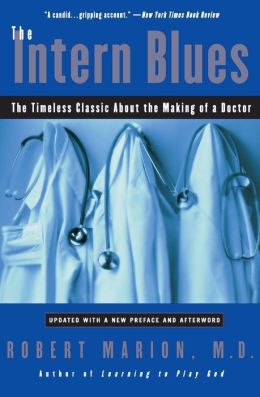
Intern Blues: The timeless classic about the making of a doctor
Amazon description: While supervising a small group of interns at a major New York medical center, Dr. Robert Marion asked three of them to keep a careful diary over the course of a year. Andy, Mark, and Amy vividly describe their real-life lessons in treating very sick children; confronting child abuse and the awful human impact of the AIDS epidemic; skirting the indifference of the hospital bureaucracy; and overcoming their own fears, insecurities, and constant fatigue. Their stories are harrowing and often funny; their personal triumph is unforgettable.
Other books on Medscape's must-read list:
My Own Country (Abraham Verghese)
Love in the Time of Cholera (Gabriel Garcia Marquez)
The Immortal Life of Henrietta Lacks (Rebecca Skloot)
Arrowsmith (Sinclair Lewis)
Complications: A surgeon's Notes on an Imperfect Science (Atul Gawande)
The Emperor of All Maladies: A Biography of Cancer
Ok, this is actually a history of medicine with a focus on cancer. I'm only about a hundred pages in, but I absolutely LOVE how the author weaves personal anecdotes of patient experiences and historical references seamlessly among the facts. Also addressed- ethics, development of modern treatment, effects on patients' lives...
Cutting for Stone
By far, my favorite book on this list, and one of my all-time favorites. I couldn't do it justice, so here's a critique:
Lauded for his sensitive memoir (My Own Country) about his time as a doctor in eastern Tennessee at the onset of the AIDS epidemic in the 80s, Verghese turns his formidable talents to fiction, mining his own life and experiences in a magnificent, sweeping novel that moves from India to Ethiopia to an inner-city hospital in New York City over decades and generations. Sister Mary Joseph Praise, a devout young nun, leaves the south Indian state of Kerala in 1947 for a missionary post in Yemen. During the arduous sea voyage, she saves the life of an English doctor bound for Ethiopia, Thomas Stone, who becomes a key player in her destiny when they meet up again at Missing Hospital in Addis Ababa. Seven years later, Sister Praise dies birthing twin boys: Shiva and Marion, the latter narrating his own and his brothers long, dramatic, biblical story set against the backdrop of political turmoil in Ethiopia, the life of the hospital compound in which they grow up and the love story of their adopted parents, both doctors at Missing. The boys become doctors as well and Vergheses weaving of the practice of medicine into the narrative is fascinating even as the story bobs and weaves with the power and coincidences of the best 19th-century novel.
The Checklist Manifesto
While the author (a physician) wrote this with the focus of medicine, it's applicable to many other fields as well- business, law, government. The author explains that while we have more knowledge and technology at our fingertips than ever before, flaws still exist in medicine (or business or law or you name it) because of imperfect execution and delivery.
For example, we know that heart attack patients need to have an intervention within a short period of time, but only about half make the time cutoff, because of all the little things in between or not recognizing the fact that the patient is having the heart attack to begin with despite our capability to do so.
Placebo Effects: Understanding the mechanisms in health and disease
I just started this a few minutes ago, which prompted me to post this blog entry. I think the idea of placebo in medicine is incredibly important and not only underutilized but unrecognized or misused. We often consider placebo effects to be psychosomatic or for weak-minded people, but actual molecular changes can occur, especially regarding pain modulation! I think this is a fascinating topic, not addressed in medical school, that can revolutionize how a doctor practices medicine. I don't think we should withhold medicine, but rather augment treatment with evidence-proven techniques like encouragement, empathy and awareness.
This book is written by a physician and geared toward physicians, unlike many of the other books which are more for patients and lay people.
The Heart Speaks: A cardiologist reveals the secret language of healing
So I haven't started this one yet, but highly recommend it by what I've heard so far. So here's a professional review.
With groundbreaking new research, Dr. Guarneri skillfully blends the science and drama of the heart's unfolding. She reveals the heart as a multilayered, complex organ and explores the new science that indicates the heart acts as a powerhouse of its own, possessing intelligence, memory, and decision-making abilities that are separate from the mind.
Heart Matters: A memoir of a female heart surgeon
Having spent six weeks on cardiothoracic surgery, this one hits close to home. There's not enough money in the world that would make me want to be a surgeon, but as a female looking to join a male-dominated field, this is a great motivator. In fact, the first chapter provided me with an epiphany for my residency application (sorry, not sharing that for awhile!). It's a humerus and occasionally-serious look at the struggles she faced in her journey to becoming a surgeon.
White Coat: Becoming a doctor at Harvard Medical School
I read this over the summer after my 2nd year, and I wish I'd found it earlier. It's a few years old, but many of the emotions and reflections eerily parallel to my own (leading me to believe that this is a good representation of what med school is like). In fact, I made my boyfriend read it at the beginning of our relationship so he knew what I was going through and how it would affect him. It basically starts at the beginning of the author's journey and chronicles the trivial and the not-so-trivial experiences, from anatomy lab to clinical rotations to life outside of the classroom (what little there is).
An oldie but goodie! The author's emotions transcend time, and are 100% applicable to being an intern today. You also need to be familiar with the laws of the House of God as they are occasionally referenced to in the clinical setting and you're expected to understand the joke.
A look inside the Hmong culture (mostly medicine) and how it clashes (and occasionally meshes with) "modern" medicine; a bit frustrating to read (I made it halfway through) but enlightening nonetheless- provides insight into cultural influence on how disease is understood, the role of family, decision-making, etc. This has greatly impacted my understanding and appreciation (and patience) for other cultures with less trust in our system.
Better: A surgeon's notes on performanceNot my favorite, but a worthwhile read. Critic review: A surgeon at the Brigham and Women's Hospital in Boston and an assistant professor at the Harvard School of Public Health, Dr. Atul Gawande succeeds in putting a human face on controversial topics like malpractice and global disparities in medical care, while taking an unflinching look at his own failings as a doctor. Critics appreciated his candor, his sly sense of humor, and his skill in examining difficult issues from many perspectives. He conveys his message—that doctors are only human and therefore must always be diligent and resourceful in fulfilling their duties—in clear, confident prose. Most critics' only complaint was that half of the essays are reprints of earlier articles. Gawande's arguments, by turns inspiring and unsettling, may cause you to see your own doctor in a whole new light.
A ridiculously easy read (written with the layperson in mind), by a neuroanatomist who details her experience of having a stroke from a scientist's point of view. I've recommended this book to family members, coworkers and patients- it's a great way for health care professionals to gain insight into what stroke patients are experiencing, and for stroke patients to understand what is happening to the brain. Symptom by symptom the author reflects on the anatomy, physiology and pathophysiology of strokes (while remarkably remaining in denial about the fact that she needed help). Pretty fascinating!
Written by Dr. Bernard Lown, who developed the defibrillator, this is one of my all-time favorites. It should be a must-read for all physicians and physicians-in-training. Using patients' stories, he reflects on the importance of empathy and compassion, and shares insight about how seemingly-trivial words can change someone's life. My favorite is when he has his students and residents listen to the "gallop" of a patient with severe heart failure, who miraculously recovered, later crediting Dr. Lown for giving him the encouragement, because a heart that could still gallop must be strong!
On the shelf, to be read:
Amazon description: In this lyrical history of our most essential organ, a critically-acclaimed novelist and a leading cardiologist--who happen to be brothers--draw upon history, science, religion, popular culture, and literature to illuminate all of the heart's physical and figurative chambers. Divided into four sections: ‘The Ancient Heart,’ ‘The Renaissance Heart,’ ‘The Modern Heart’ and ‘The Future Heart,’ each section will focus on a major epoch in our understanding of the heart and the hidden history of cardiology. Erudite, witty, and enthralling, The Sublime Engine will make the heart come alive for readers.
Amazon description: While supervising a small group of interns at a major New York medical center, Dr. Robert Marion asked three of them to keep a careful diary over the course of a year. Andy, Mark, and Amy vividly describe their real-life lessons in treating very sick children; confronting child abuse and the awful human impact of the AIDS epidemic; skirting the indifference of the hospital bureaucracy; and overcoming their own fears, insecurities, and constant fatigue. Their stories are harrowing and often funny; their personal triumph is unforgettable.
Other books on Medscape's must-read list:
My Own Country (Abraham Verghese)
Love in the Time of Cholera (Gabriel Garcia Marquez)
The Immortal Life of Henrietta Lacks (Rebecca Skloot)
Arrowsmith (Sinclair Lewis)
Complications: A surgeon's Notes on an Imperfect Science (Atul Gawande)
December 13, 2011
Don't wanna go home
So I was on call today and I was with the residents having a relaxing late lunch- as we only have one patient and haven't had any new admissions- and they mentioned that once I did this one task that I could go home. Normally any mention of the word "home" causes a huge rush of endorphins and racing thoughts of how I can finish my assignments as quickly as possible. But today my unconscious first thought was "I DON'T WANT TO GO HOME!"
(mental silence.)
I realized instantly how ridiculous that sounded as soon as I thought it. I'm perpetually exhausted, my apartment is a mess, and I have two dogs at home who can't hold their bladders for 12 hours. I obviously had a split second of mental insanity.
However, reflecting over the past hour (it's still bothering me), I cant help but be incredibly grateful for an amazing group of residents for these 3 weeks who have actually made me feel like I've done a good job and haven't been a complete waste of their time.
So now it's much later and I got my horrible wish to stay because we got a new patient.
But I got to hear a male resident sing Justin Bieber songs and that was the icing on today's cake.
Subscribe to:
Posts (Atom)